
Tal el-Far'ah
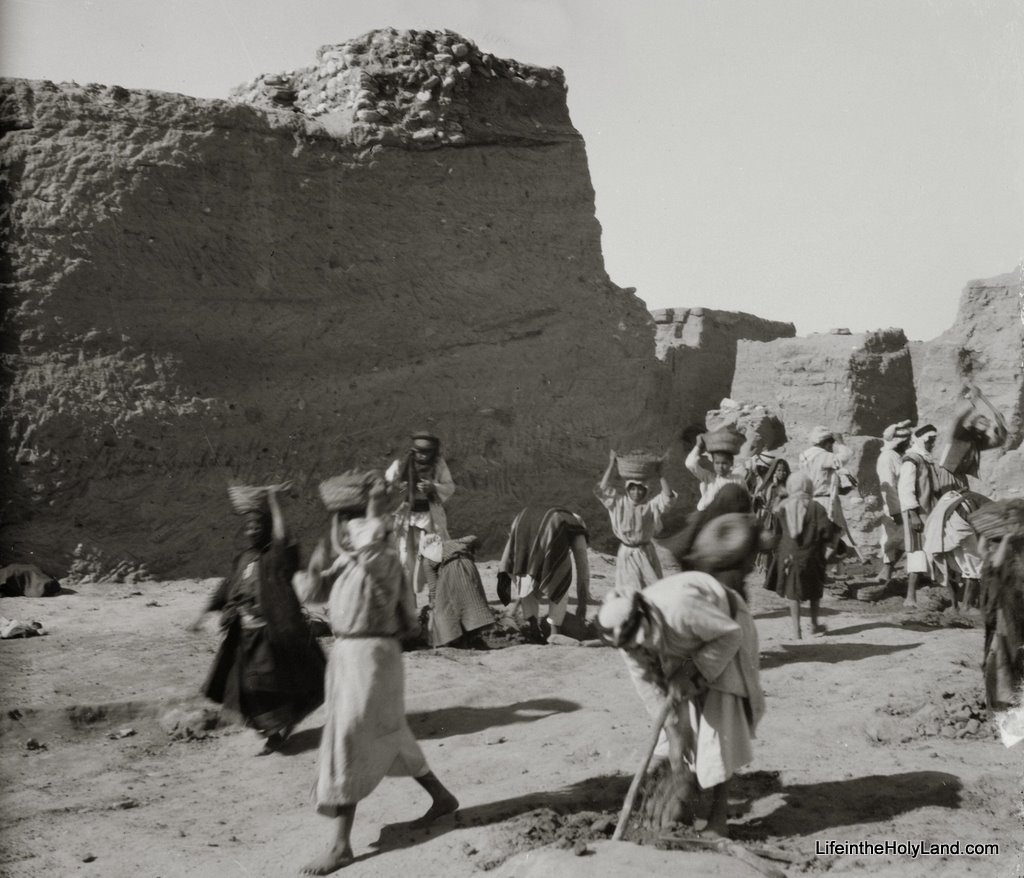
Tal el-Far’ah is located in the el-Far’ah area, about 1 km south of the el-Far’ah refugee camp. It covers an area of approximately 180 dunums and rises about 198 meters above sea level. It was mentioned in the Survey of Western Palestine, and also referenced by the French scholar Victor Guérin and the British scholar Edward Robinson.
The site dates back to several different historical periods, starting from the Neolithic and Chalcolithic periods, through the Bronze Age and Iron Age. Excavations at the site were first carried out by the French mission from the École Biblique and the French School of Archaeology in Jerusalem under the supervision of Roland de Vaux. The site was excavated between 1946 and 1960 over nine separate seasons. The French excavation revealed a layer dating to the Early Bronze Age, uncovering city walls and fortifications, some residential buildings, a two-chamber pottery kiln, a temple, and an olive press, in addition to the western gate of the site. Moreover, evidence from the Middle Bronze Age was also discovered, showing that the city was smaller than it had been in the Early Bronze Age. Around 1700 BCE the city flourished again, and new fortifications were constructed. During the Late Bronze Age, no significant changes in the city were observed. Numerous archaeological findings dating to the Iron Age were also uncovered at the tell, including houses, statues, arrowheads, pottery, and other artifacts. These artifacts are now distributed among several museums, including the Louvre Museum in Paris, the Rockefeller (Palestine) Museum in Jerusalem, and the Jordan Museum at the Amman Citadel.
In October 2016, a new excavation project was announced at Tell el-Far’ah, in partnership between the Palestinian Ministry of Tourism and Antiquities, the University of Lisbon in Portugal, and the University of Coruña in Spain. The project aims to study the urban development of the site as well as its archaeological and cultural layers.